
Columbia County Three-Day Release Gap
The Columbia County Sheriff's Office does not publish a rolling 72-hour list of released detainees. It also says the current inmate list is no longer available on the Sheriff's website. The remaining P2C inmate module is a restricted, person-specific search. Its public settings require first and last name and suppress release date, release time, and release reason.
Those limits prevent the P2C tool from acting as a three-day archive. They also mean that absence from a web result cannot prove a Columbia County release. A person might remain in custody, be omitted from the public interface, have left the Columbia County jail, or have transferred into a different system. A three-day check must trace the event through the jail and the source that authorized or received it.
A rolling list normally depends on a public timestamp, release reason, and stable window. None is supplied here. Columbia County's public P2C settings instead hide the release date and reason. The county also gives no feed cadence or retention period. A user cannot safely infer that the tool shows three complete days, or that an older result vanished because the window expired.
Trace Columbia County 72-Hour Releases
A three-day review starts by fixing the date range. Note the current time, then count back three full days. Ask each source about that span instead of asking only whether someone is in custody now. The Columbia County 24-hour release check is better when the event is known to be from today.
- Contact Columbia County Detention Center at 706-541-0754 and ask whether the person left county custody during the defined span.
- Use the restricted P2C search for a known person, while recognizing that its public release fields are hidden.
- Check Georgia VINE for custody status or a recorded change involving the Columbia County jail.
- Search the Columbia County court docket for a bond, sentence, dismissal, or order entered during the period.
- Request an official jail release record when the date, time, reason, or destination is still unclear.
Ask about destination as well as release. If county custody ended because GDC, BOP, ICE, or another jail received the person, the Columbia County event is a transfer, not a walk into the community. The receiving agency's locator then becomes the next status source.
The order of those checks matters. Jail staff can speak to local custody, while the court can explain the legal action. Georgia VINE can provide a timely status signal for a selected person. A Sheriff's records response is the best local path when the question needs a fixed date, time, reason, or destination that can be compared across the full three-day span.
Columbia County 72-Hour Record Fields
No public Columbia County three-day list displays a standard field set. A records request should therefore name the facts needed to reconstruct the window. The request can ask for releases between two dates and times, but the agency will decide what existing record is responsive. Do not assume it must create a new rolling report.
| Needed field | Why it matters |
|---|---|
| Name or booking identifier | Separates people with similar names and ties the event to a jail record. |
| Release date and time | Places the event inside or outside the exact 72-hour range. |
| Release reason | Shows whether custody ended by time served, court order, bond, or another action. |
| Charges tied to release | Helps show whether all local holds cleared or only one case changed. |
| Destination | Distinguishes community release from transfer to another agency. |
Columbia County publicly identifies time served, court order, and bond as release categories. A court docket may show the order, bond, or sentence behind one of those outcomes. The jail record is still the better source for the actual exit time and final destination.
Bond can complicate the date range. A property bond needs the local tax assessment form and identification, while out-of-county Georgia property follows that county sheriff's sealed process. Larger property bonds require proof of equity, and cash bonds require the full amount plus processing costs. Completion of those steps may occur at a different time from the first court or family report that a bond was available.
Note: Define the start and end time in a three-day request so the responsive release period is clear.
Columbia County Weekend Release Checks
The main benefit of a 72-hour review is context. A Friday court event may not finish at the Columbia County jail at the same moment. Staff must match release authority to each charge, confirm identity, run a wants-and-warrants check, process detention property, return clothing and personal property, and escort the person through Booking to the lobby. A new hold can change the result.
Weekend and holiday timing also separates the event from later office work. The Sheriff's Records Department lists weekday business hours, while custody processing is a jail function. If a weekend call gives only a present status, request the written release record when records staff reopen. Court entries can help explain why release was authorized, but a docket date is not always the jail exit time.
For a person serving a local sentence, time served may be the reason. For a pretrial case, an accepted bond or court order may control. A felony sentence can instead send the person to GDC. These outcomes may all remove someone from local detention during the same three-day span, yet only the first two may mean a direct return to the community from the county jail.
The Columbia County Superior Court source is useful for felony disposition and release-order context.
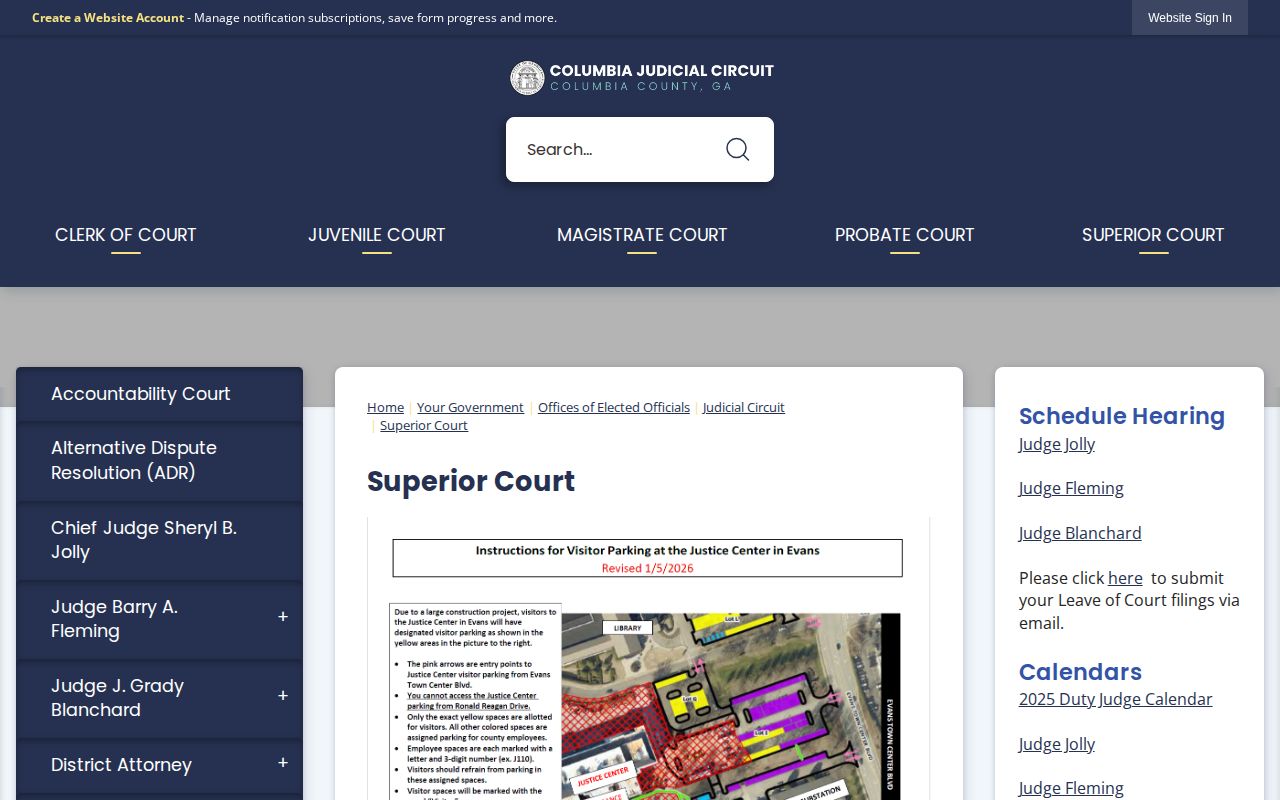
The court source can explain legal authority within the three-day span, while the Detention Center confirms whether that authority led to a completed county release.
Why Columbia County Results Vanish
The local data quirk is not short retention in a public release list. It is the lack of such a list. The Sheriff's Inmate Inquiry page states that its current inmate list is no longer available, and the P2C settings hide the public fields that would mark a release. No official 24-hour, 48-hour, or 72-hour release window, update cadence, or retention period was found.
P2C can search a specific person using required first and last name. Its broader search criteria include middle name, age, charge, arrest date, race, and sex, but restricted mode keeps it from operating as an open release browse. Even when a result appears, the hidden release fields prevent the public screen from documenting the exact event needed for a 72-hour list.
That makes the court docket and records response more durable than a web roster. Older entries may show the charge, lawyers, and proceeding history. A records response may state the jail's release event. Neither should be confused with the live custody status of a person who has since moved to another agency.
The Georgia VINELink service adds timely custody-status checks and alerts.

VINELink follows a specific record and may flag a change, but it is not a browseable Columbia County release roster.
Columbia County Three-Day Fallbacks
When the jail call, P2C name check, and VINE status still leave doubt, use the source that owns the record. Columbia County accepts open-records requests through an online portal and by in-person, mail, or email channels. Ask for the release date and time, reason, and destination. The Records Department phone is 706-541-1042, and its listed hours are 8 a.m. to 5 p.m. Monday through Friday.
The email route is orr@columbiacountyso.org. In-person records locations are listed at 2269 County Camp Road, Building G-2, in Appling and 650A Ronald Reagan Drive in Evans. A request can state the start and end of the 72-hour range and name the existing jail release fields sought. It should not ask the agency to create a public feed that it does not maintain.
A state-prison release belongs to GDC and the State Board of Pardons and Paroles, not the Columbia County release window. A federal sentence release belongs to BOP. ICE uses its own locator. Those systems may preserve a release or not-in-custody status after the county's role ends.
| Custody path | Three-day confirmation source |
|---|---|
| County jail | Detention Center, Sheriff's release record, and court docket |
| State prison | GDC offender search, parole tools, and GDC records |
| Federal prison | BOP inmate locator and federal records |
| Immigration custody | ICE locator after a county detainer transfer |
A complete answer states both when Columbia County custody ended and what happened next. That approach is slower than reading a feed, but it avoids treating a hidden roster result as proof of release. When the person's custody history is uncertain, the Columbia County released-inmate lookup compares the local, state, federal, and immigration paths.
For an older event, retain the records response and compare it with the court proceeding history. Online status tools are best for a current signal. Court and agency records provide the more lasting account of why county custody ended and whether another custody or supervision phase followed.